Exoskeletons Move From Lab Curiosity to Everyday Work Tool
Wearables·October 4, 2026
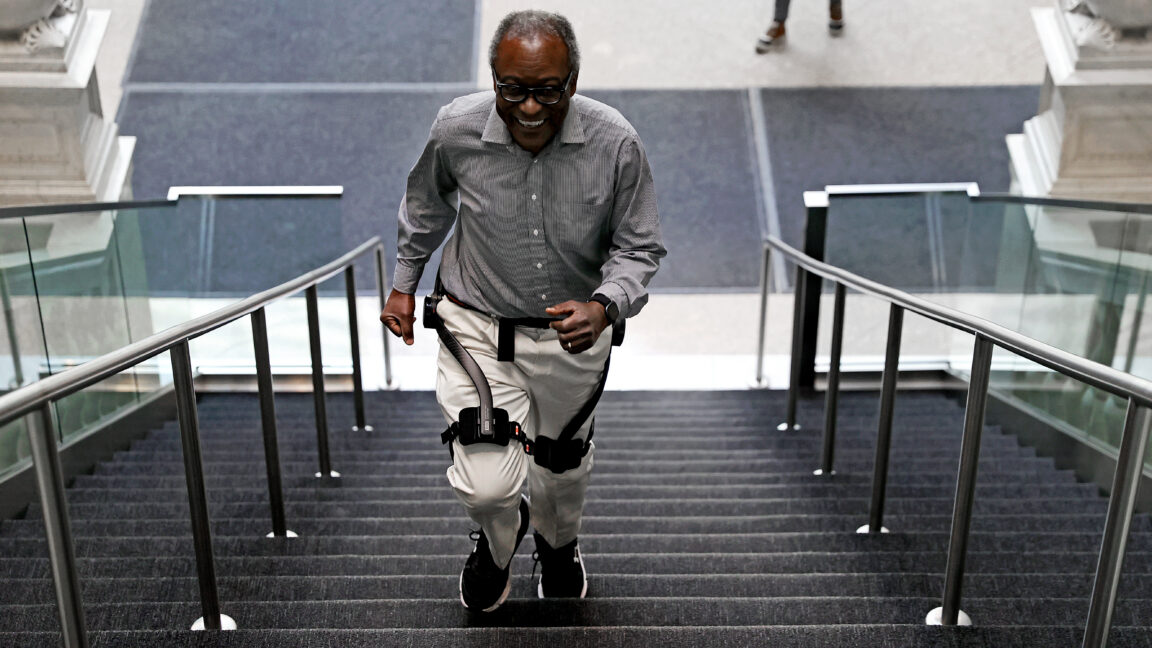
Exoskeletons have spent decades as a staple of science fiction and a fixture of research labs. Now they are starting to prove their worth outside controlled settings, with users reporting and measuring real gains in everyday tasks.
The latest wave of devices focuses on practical assistance rather than superhuman strength. Instead of full-body suits that carry heavy loads, many current designs are lightweight systems that support a single joint or muscle group. Powered hip and knee units, for example, add a small amount of torque while walking or climbing, reducing the effort needed to cover the same distance. Passive frames for the shoulders and back use springs and elastic elements to take some of the strain off workers who hold their arms overhead or bend repeatedly through a shift.
Evidence from field use is what separates this moment from earlier hype. Rather than relying only on treadmill trials, researchers and companies are testing devices on hills, stairs, warehouse floors and construction sites. Users in these settings tend to report less fatigue and less strain, and measurements of effort and muscle activity often back that up. The gains are usually modest on a per-step or per-lift basis, but they add up over a long day or a long route.
That matters for several groups. Industrial employers see a possible way to cut repetitive-strain injuries, a costly and persistent problem in logistics, manufacturing and trades. Outdoor enthusiasts see a way to hike farther with less exhaustion. In healthcare, powered suits continue to help people with mobility impairments stand and walk, and similar technology is being adapted for older adults who want to stay active.
Challenges remain. Cost is still a barrier for many buyers, and battery life limits how long powered units can run. Fit and comfort vary from person to person, and a device that helps one wearer may hinder another if it is poorly tuned. There are also open questions about long-term effects, such as whether relying on assistance changes how muscles work over time, and about how to set safety standards for gear worn on the body in busy workplaces.
Even so, the direction of travel is clear. As motors, batteries and control software get smaller and smarter, exoskeletons are becoming less like movie props and more like another piece of equipment, closer to a good pair of boots than a robot suit. The benefits are no longer just promised in demos. They are being measured on real jobs, by real users.
Reporting based on an external source.