NASA Tore Up the Rulebook to Rescue Swift, and Still Came Up Short
Space Tech·October 2, 2026
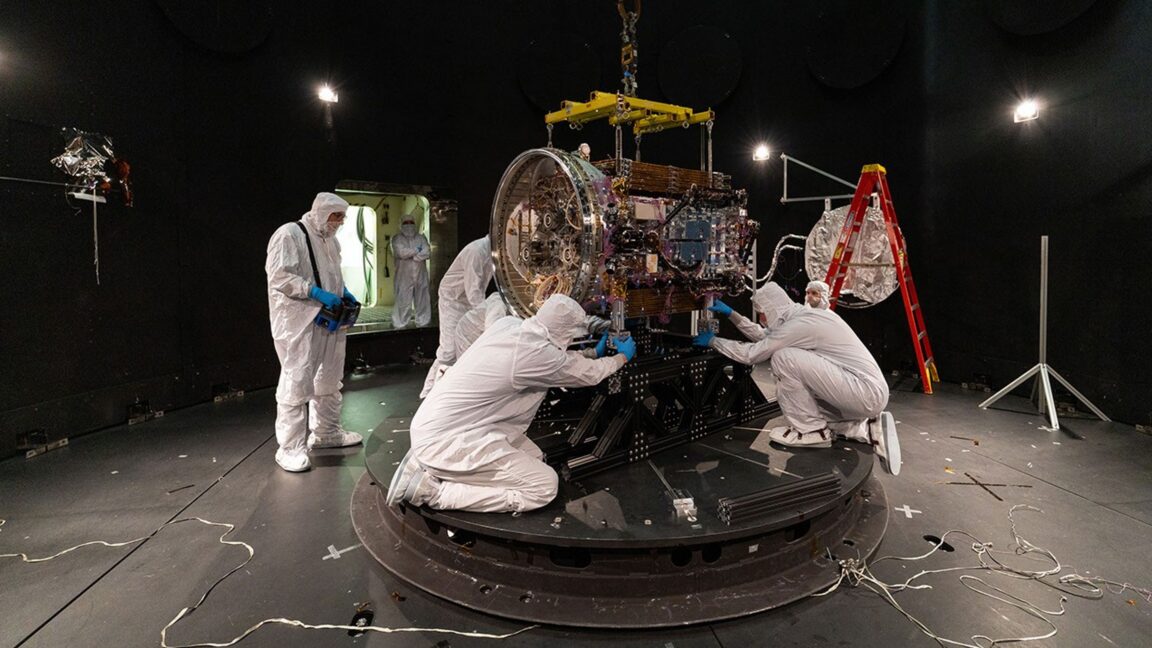
NASA's attempt to save the Swift space telescope was never going to be a routine mission. According to people involved, it turned into one of the agency's more unconventional efforts in years, with fast-tracked money, AI-assisted coding and a procurement approach far from the usual playbook. It still did not get as far as the team hoped.
Swift has been a workhorse since its 2004 launch, catching gamma-ray bursts and other violent cosmic events and quickly alerting other observatories to look. But its orbit has been sinking, a problem worsened by heightened solar activity that thickens the upper atmosphere and drags on satellites. Without a boost, the spacecraft faces an eventual fall back to Earth, and the clock on that decline set the pace for everything else.
That deadline pushed NASA toward a rescue plan built around a commercial servicing spacecraft, an approach the agency has rarely tried at this speed. Reporting on the effort describes officials squeezing money and approvals through the system, including a notable push involving the Treasury, to get work moving on a timeline that conventional government contracting would not normally allow.
The engineering side broke with tradition too. Team members leaned on so-called vibe coding, where developers use AI tools to generate large parts of software from plain-language prompts, to speed up development. It is a controversial choice for spaceflight, where flight software is usually written, reviewed and tested at a glacial and deliberate pace. Using it here reflects how little time the team had, and how willing NASA was to experiment when the alternative was losing a productive science asset.
For those who worked on it, the result is bittersweet. "We did some really, really cool stuff," one participant said. "I'm absolutely gutted we weren't able to get further."
The comment captures the tension at the heart of the story. The rescue effort showed that a government agency can move faster, take more risk and rethink how it buys and builds hardware when the pressure is on. But speed and creativity do not rewrite orbital mechanics, and they cannot always compensate for a late start.
The episode is likely to be studied well beyond Swift. As more aging satellites approach the end of their lives, and as commercial servicing companies try to build a business around extending them, the Swift rescue offers a template and a warning. The template is that flexible funding, commercial partners and modern software tools can compress years of work into months. The warning is that even a heroic, rule-bending effort may not be enough when the margin for error has already shrunk to almost nothing.
For astronomers who depend on Swift's rapid-response observations, the outcome matters. Few instruments can swing to a new target within minutes of a burst, and replacing that capability will take time. Whatever happens to the telescope itself, the team's lessons on moving quickly may prove to be its most lasting contribution.
Reporting based on an external source.