Venus' Mysterious Haze May Be Cosmic Dust, New Model Suggests
Space·October 5, 2026
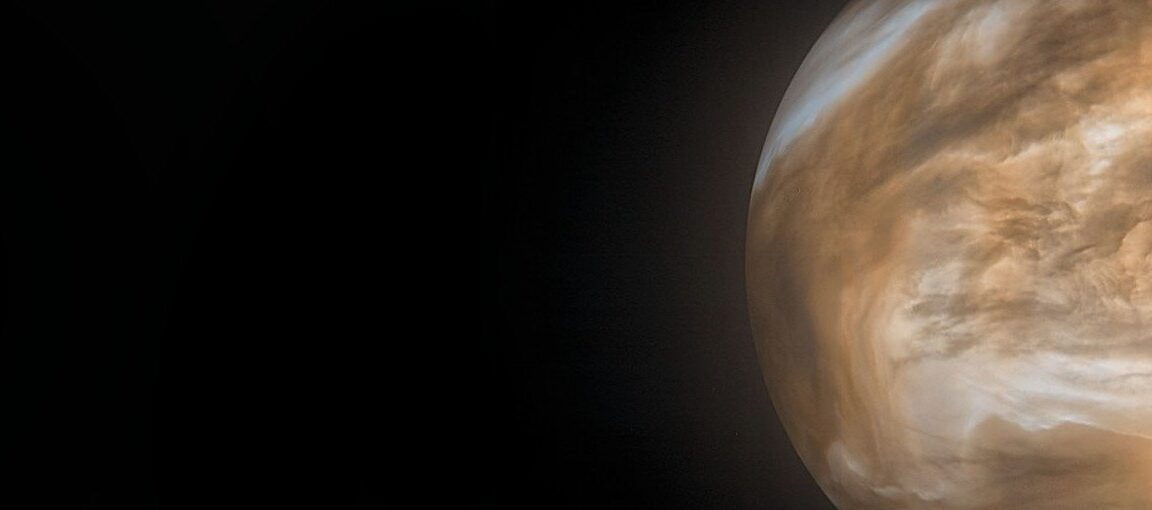
Venus has kept one atmospheric puzzle stubbornly unsolved: what exactly is the haze that hangs in its upper layers? A new physical model points to an answer that comes from far beyond the planet. According to the research, iron dust of cosmic origin combined with sulfuric acid can reproduce the properties scientists have observed.
The haze has long been a problem for planetary scientists. Venus is wrapped in thick clouds of sulfuric acid, but observations show that something else in the upper atmosphere absorbs and scatters light in ways pure acid droplets cannot fully explain. The unidentified component has been the subject of debate for decades, with various candidate compounds proposed and none settling the question.
The new model takes a different approach. Rather than looking for an exotic chemical produced inside the atmosphere, it considers material arriving from space. Interplanetary dust constantly rains onto planets as they move through the solar system, and that dust carries metals, including iron. When such particles enter the Venusian atmosphere, they can interact with the sulfuric acid present there.
The researchers built a physical model of how those iron-bearing particles and acid would behave together, then checked the result against what instruments have seen. The mixture produced the right optical behavior, meaning the way the haze interacts with light lines up with the observations that have been hard to explain.
That match is the central appeal of the idea. It does not require a new, unusual compound, only ingredients that are already expected to be present: a steady supply of cosmic dust and an atmosphere rich in sulfuric acid. It also ties the planet's haze to a process that should operate at other worlds with similar conditions.
As with any model, the result is not final proof. A good fit shows the explanation is plausible, not that it is the only one, and confirming it would take direct measurements of the haze particles themselves. Atmospheric sampling or detailed spectroscopy from future missions to Venus could test whether iron-rich dust is really there in the amounts the model needs.
Still, the finding is a useful step. If cosmic dust is shaping the look and chemistry of Venus' upper atmosphere, it could also help researchers understand how the planet's clouds form and evolve, questions that matter for the broader effort to explain why Venus turned out so different from Earth.
Reporting based on an external source.