Pharma's Patent Stockpiling Is Quietly Extending Drug Monopolies for Years
September 28, 2026
Drug companies have found a reliable way to keep competition off the market long after a medicine's core invention should have become fair game: file more patents. Lots of them.
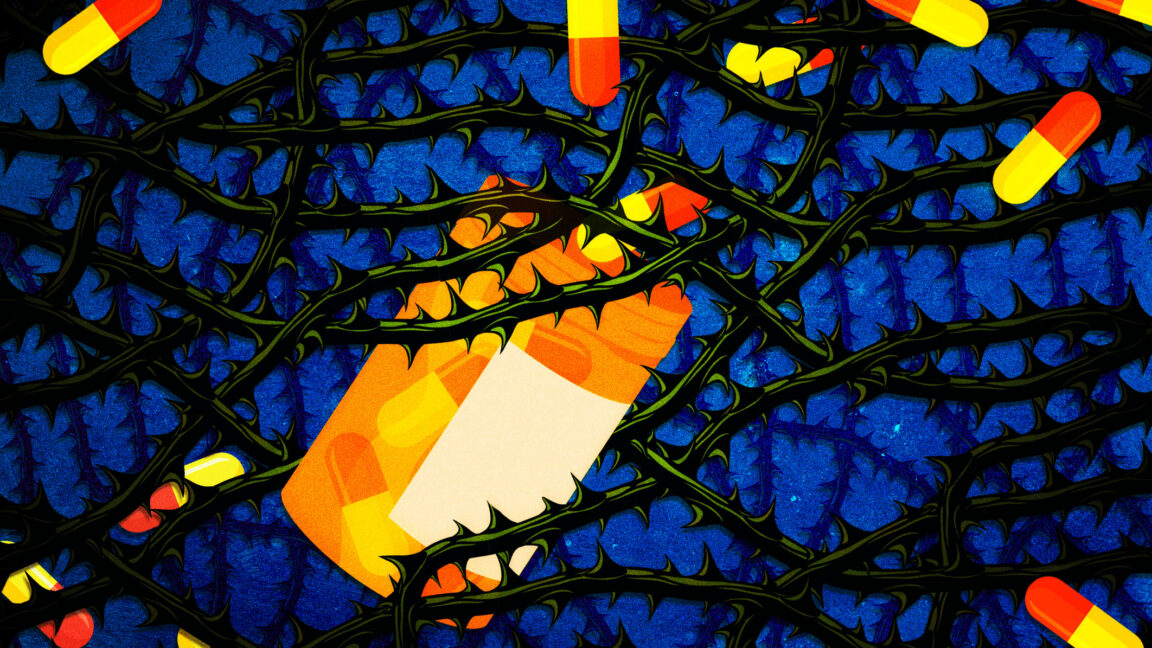
New analysis of patent filings shows that pharmaceutical companies have dramatically increased the number of secondary, or "add-on," patents they attach to their top-selling drugs. These aren't patents on the original active ingredient, which is usually protected by a single patent early in a drug's life. Instead, they cover incremental tweaks: a new manufacturing process, a specific dosage schedule, a coated pill formulation, a method of combining the drug with another treatment. Individually, many of these patents look minor. Collectively, they form a thicket that can keep generic or biosimilar competitors locked out of the market for years beyond what the original invention would justify.
The effect on timelines has been dramatic. Where drugs once lost their effective exclusivity roughly two years after the earliest disqualifying patent activity, that window has stretched past six years, according to the analysis. That difference translates directly into how long a manufacturer can charge monopoly prices before facing generic competition.
This tactic, often called "evergreening" or "patent stacking," isn't new, but its scale has grown substantially. Blockbuster drugs for conditions like diabetes, arthritis, and cancer have each accumulated dozens, sometimes over a hundred, patent filings tied to a single product. Critics, including patient advocacy groups and some lawmakers, argue the practice exploits a patent system designed to reward genuine innovation, using it instead to insulate revenue rather than to protect a meaningfully new invention.
Pharmaceutical companies defend the practice as legitimate. They argue that follow-on innovations, like improved formulations or new delivery methods, provide real value to patients and deserve their own protection, and that the additional patents are the product of continued research investment after a drug's initial approval.
The debate has real financial stakes. Every additional year a drug stays free of generic competition can be worth billions of dollars to its manufacturer, and a corresponding cost to insurers, government health programs, and patients paying out of pocket. Prescription drug affordability has become a persistent flashpoint in the United States, with lawmakers on both sides periodically proposing changes to patent law or drug pricing policy aimed at curbing evergreening specifically.
The U.S. Patent and Trademark Office and the Federal Trade Commission have both signaled interest in scrutinizing patent thickets more closely in recent years, including reviewing whether some secondary patents should have been granted at all. But so far, the underlying incentive structure that rewards filing more patents to extend exclusivity remains largely intact, and the gap between a drug's original invention and its actual competitive lifespan keeps widening.
Reporting based on an external source.